That Man's Making Moves
We've been rerouting our whole lives around a road nobody was using.
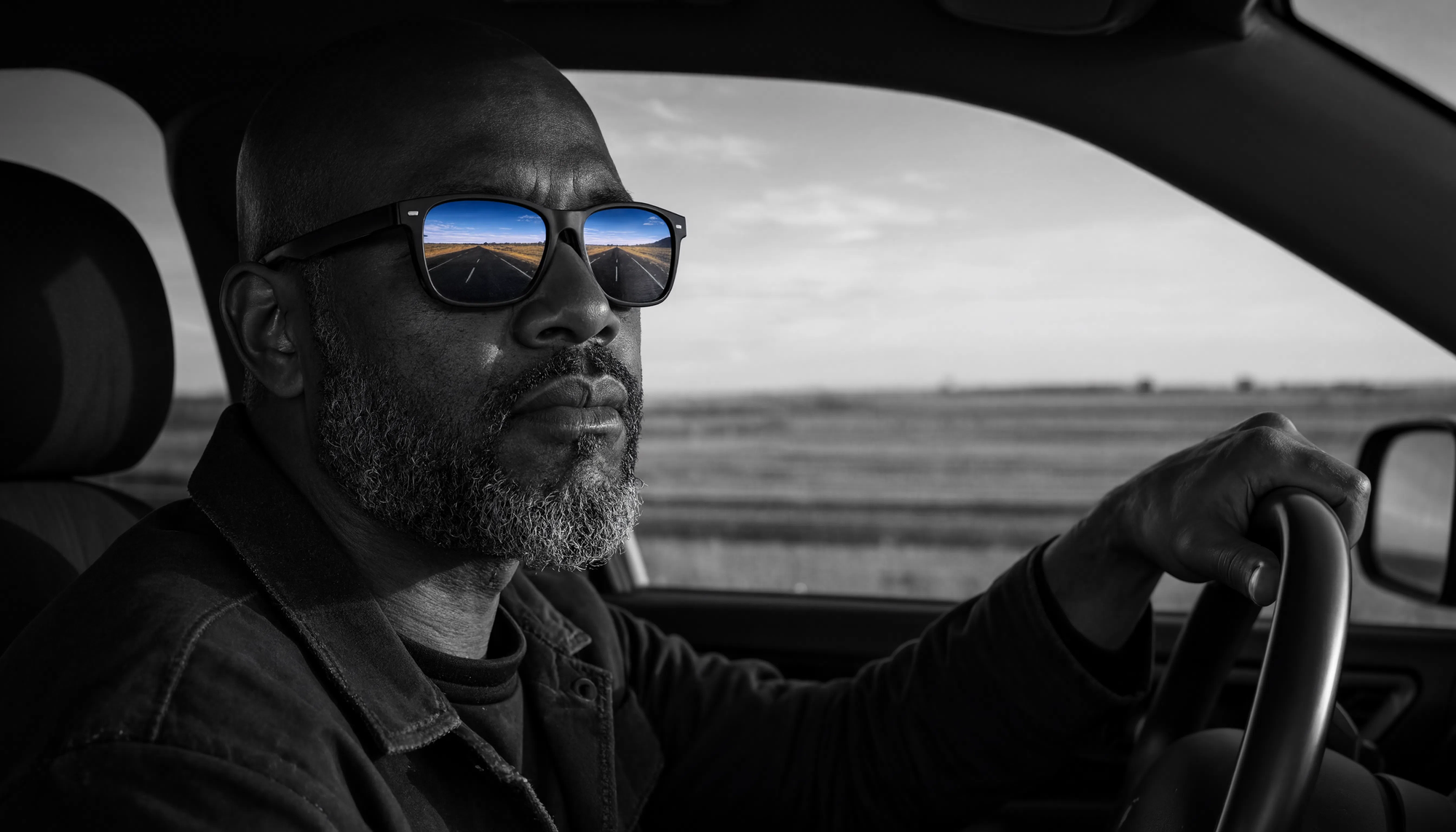
We've been rerouting our whole lives around a road nobody was using.
When I started driving, I had to rely on printed maps. GPS was not as commercially available as it is now, which meant that I was limited to what was printed on the map. I was also confined to possibly outdated information, because infrastructure could evolve from the time the map was printed and when it sat in the passenger's seat next to me. The saving grace was that the more familiar I became with an area, the more alternate routes I could unlock to get me where I wanted to go. So while the map may only outline a straight path, I could take side streets not listed on the map when traffic or road closures called for it.
Then GPS became available. That meant my attention wasn't fighting between a static map next to me and the road in front of me. Now I had a blip on a dynamic map, and I could see where the next turn would be. Unfortunately, GPS was limited to satellite data, which meant it was a glorified map to give directions in real time without the context of traffic or construction. While we advanced from physical maps, I was still encouraged to learn the area and not be dependent on a map, even if it was a digital one. A straight path with a 10-minute commute becomes a complete stop with a 45-minute wait if you leave the house at the wrong time.
Enter Google Maps.
It coupled highway layout information with real-time traffic analytics. Google Maps would not only show you the way, but it would redirect you if you missed your turn. Getting lost had never been harder, because, let's be honest. How many times have we heard the Google Maps Lady say "Recalculating" after we've missed our turn…again? Google Maps, and other modern navigation systems, accurately told us when traffic would cause a slow down and provided alternate routes. We trusted it.
Until someone showed that it couldn't be trusted. At least not fully.
In February of 2020, one artist in Berlin tricked a global organization known for the volume and validity of its data. Simon Weckert calmly walked down quiet streets, pulling a small red cart with 99 used mobile phones. The phones' location and movement data was reported to Google's servers. To Google, it appeared as a slow-moving traffic jam. To those on the road, it was a man with a cart. Google Maps would tell its subscribers to take a different path because the one they would normally take was too crowded. In reality, a driver would make it to their destination on time, but ponder why a grown man was pulling a wagon in the middle of the street. Google's arguably strongest asset would prove to be a risky weakness: crowdsourced data. If you rely on what the crowd tells you, you're hitching your wagon to stats that can be manipulated.
How many times have you been told that the way to get to your destination was blocked, only for you to see that it was not once you were brave enough to make the drive? The unsettling truth about the journey of many creatives is realizing that some of the traffic you've been trying to avoid was staged. Many of us have been rerouting our entire lives around a road that nobody was actually using.
From printed maps to digital ones to satellite-powered ones to crowdsourced versions, we are still encouraged to go, learn, and see for ourselves. What Weckert did with false traffic data, HOLC did with misleading value data.
Between 1935 and 1940, a federal agency called the Home Owners' Loan Corporation (HOLC) sent examiners across the country to grade American neighborhoods on lending risk. They called them Residential Security maps. Green meant that the neighborhood was best, blue meant it was still desirable, yellow meant declining, and red meant that it was considered hazardous. Red is where we get the word redlining. A red grade told banks the ground wouldn't hold its value, and the examiners counted Black neighbors among the things that made ground lose value. So a respected, employed, middle-class Black family didn't lift a neighborhood's grade. Under that math, they were the reason for it.
Those examiners didn't arrive at the grades on their own. They sat with local bank loan officers, appraisers, and realtors, and they wrote down what those men already believed. The map compiled the crowd. Same as the phones in the wagon, the data was only as honest as whatever fed it, and what fed it was every man in town who counted your presence as a liability. Banks read the red and closed the road. No mortgage meant no house, no house meant no equity, and no equity meant nothing to hand your children. Repairs didn't happen. Businesses didn't come. When the National Community Reinvestment Coalition laid those old maps over census data in 2018, 74 percent of the neighborhoods graded hazardous were still low-to-moderate income, and close to 64 percent were neighborhoods where most residents are people of color. Weckert's traffic jam disappeared when he pulled his wagon home. The red never lifted, and the numbers caught up until the map looked like it had been right all along.
Crowdsourced data carries whatever bias the crowd already had. That is more reason to ask yourself four questions as a creative:
- Where am I actually going?
- What's the traffic (how is everyone else doing this)?
- What's my alternate route, given my constraints?
- What can't change no matter which route I take?
Let me tell you about a time when I didn't consider number 4 and I was almost fired for it.
After leaving my first job, I worked at a department store in customer service. Customers have a tendency to use retail workers as the target for their frustration. A tough day at work for them meant that they would make a tougher situation for the sales associate. And, to be honest, some people were just mean.
Such a woman came to my register, asking for assistance with an exchange for overalls she ordered for her husband. After telling her that I would be happy to help, I asked for her phone number, located her order, and began to process the exchange.
"What's the reason for the exchange?" I asked. "They're the wrong size," she answered. "Got it! And what size would you like?" was my response. "They're the wrong size." was hers. "Yes, ma'am. Understood. What size would you like for me to order?" I patiently responded. "They're the wrong size." came condescendingly from her lips.
This continued for three or four more rounds. I glanced from her to the growing line of customers, back to her and the overalls.
At my wit's end, I plainly told her, "Ma'am, I can't help you if you don't tell me which size you need for me to order."
She snarled and told me, "I don't like your attitude. It's ugly."
I rolled my eyes and sighed, "I don't like your face. It's ugly, too. Next customer."
The rude lady stepped to the side with her gasters flabbered. The next customer giggled as she walked towards me and I solved her issue in record time.
My response worked. The line cleared, the next customer laughed, and the route was efficient. But efficient routes do not mean the absence of wrongdoing. The interesting part of this story is that the customer ran a broken script on a trafficked path where she couldn't recalculate. "They're the wrong size," was on loop. I had one route, too, and it was to match her energy. Two people were stuck on the only road they knew, or at least claimed to know.
Overalls lady found a department manager, but I don't know if she ever ordered the right size overalls for her husband. I'd imagine he ended up working in the garden with overalls that couldn't be fully strapped because they were too small. Or, maybe he tripped and fell in the peonies he wanted to plant because they were too long.
That manager later talked to me and asked for my side of the story. I told her the truth, and she did her best to hide the grin on her face as she asked me if I really called the lady ugly. I answered truthfully with a straight face. She told me that despite what the customer does, I can't call them ugly. She never told my immediate manager, or the general manager. Maybe she should have, but I'm glad she didn't. The grace she showed me was the result of my track record: I consistently did great work, helped customers, and had a pleasant attitude. Well, until my kindness was depleted after multiple frustrating customers.
What I learned is a system that I use almost 30 years later.
You can't pay me enough money for me to discard my integrity. That also means you can't pay me so little that I forget my integrity. Proving that someone is wrong is not worth me being anything but righteous. I had to learn that behind a register before I could use it leading teams at global cybersecurity firms. Makers must learn lessons and make the lessons work for them. That's the portfolio that increases in value.
Now the people who knew me behind that register see me in cyber, and they all say the same thing: That man's making moves.
John penned the words of Jesus and tells us:
“I have told you these things so that in me you may have peace. You will have suffering in this world. Be courageous! I have conquered the world.” - John 16:33 (CSB)
Read that with a systematic understanding of the Bible, along with what Paul writes:
“For we are his workmanship, created in Christ Jesus for good works, which God prepared ahead of time for us to do.” - Ephesians 2:10 (CSB)
Jesus told His disciples plainly that a time was coming when Christ would be left by His disciples, because they would be scattered. The world would rejoice, but God's people would know grief. But soon after, the roles would be reversed. The disciples would see Christ again, and they would have joy. He promised them two things: that in this world, trouble is guaranteed. But there was a reason to find peace and joy, because the trouble-filled world was overcome by a victorious Savior.
Paul furthers this cause for joy, because he tells us that Believers are a part of the work that God did. That perfect work involves us to do good work in Jesus, and we are guaranteed to win. The fight is fixed; God prepared the good works before we were even born.
So, fellow maker, we have a working navigation system with three things:
- A read on the road: where we're going, where the traffic is, and what alternate route our constraints allow.
- A vehicle that improves with mileage: your creative portfolio is the car, not the record of trips taken. Every route you navigate should make the next one less expensive on your efforts. We learn as we move.
- A fixed reference point: as we move, we also learn, and the learning gives us integrity from God that will keep us from breaking character even when opposing forces attempt to break our maps.
Already worthy means you don't need permission to take a different road. Create boldly means that you take it, but you take the road with your integrity.
From printed maps to digital ones to satellite-powered ones to maps drawn red on purpose, we're still encouraged to go, learn, and see for ourselves. Hacked maps can't block hopeful makers.
The receipts (sources cited)
- The Guardian, "Berlin artist uses 99 phones to trick Google into traffic jam alert," February 3, 2020 — https://www.theguardian.com/technology/2020/feb/03/berlin-artist-uses-99-phones-trick-google-maps-traffic-jam-alert
- National Community Reinvestment Coalition, Bruce Mitchell PhD and Juan Franco, "HOLC 'Redlining' Maps: The Persistent Structure of Segregation and Economic Inequality," March 20, 2018 — https://ncrc.org/holc/