That Boy's Working
Aisle 4, Register 5, and the Office Door
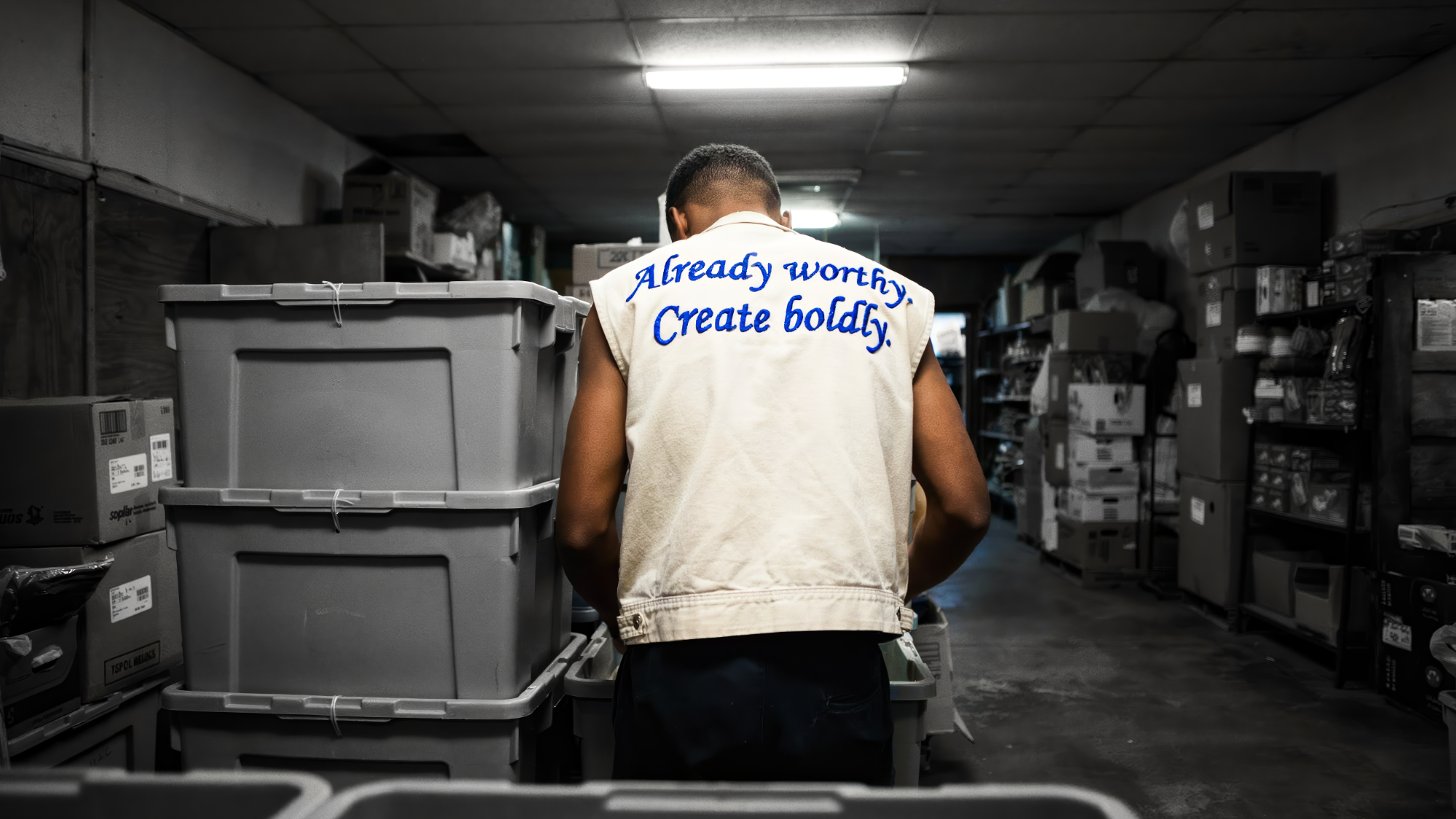
My mom gave me the outfit that caused people to notice my style because she was my provider. She helped me get my first job, because that was my provider’s way of teaching me to provide for myself.
The system that got me in the door
We’ll come back to my job in a moment, but let’s first talk about the system that got me the job. My mom (whom I call Muh) previously worked at a small retail store in Fayette County, TN, so she knew the hiring manager. Her work earned her his ear, and when I was old enough to work, she introduced me. While the small town of Somerville, TN and its even smaller shop of Fred’s Dollar Store didn’t have a sophisticated hiring system, I was able to forgo any formal interview because my momma knew the manager. Muh’s hard work gave me an avenue to do hard work. A 16-year-old Karsten walking next to his mom heard the sentence that began the working portion of my life.
“If you think I was a hard worker, then let me introduce you to my son!”
Muh used that phrase and that system, just like other Black creatives did before her. That process is called the relationship network, and that process is an example of a system. I told you that Chearis is a creative system for Foundational Black Americans, and we make for those who are already building something, intentionally or not, and never needed permission to begin. Let’s define “system.”
A system is two or more steps that, when done together in the right order, with the right resources, for the right purpose, to the right audience, produce change.
Let me be clear. “Produce change” is not always a good thing. If I just gave you the definition of a system, I also have to give you two caveats.
- Systems are not morally good or bad; why they exist and what they produce decides that.
- Systems are not effectively good or bad; a righteous system can fail, and an evil one can run flawlessly.
The system of relationship networks has been used to help many Black people not thrive, but simply survive. Who we know has kept us alive long enough to receive things that all people should have, like freedom. The Underground Railroad was a network of routes, places, and above all, people that guided ~100,000 enslaved people to freedom. The Underground Railroad is the receipt.
But systems have also been used to keep us down. Affluent cultures have used their relationship networks to keep their people thriving while keeping Black people, along with other marginalized communities, out of the neighborhood of success. That system is called nepotism. How many times have you had to work harder because someone higher in the hierarchy didn’t work at all? If you asked a peer how that leader is still employed despite constant failures, you might hear, “You don’t know? That’s one of the chief officers’ nephews.”
The C-Suite’s bloodline gets richer while those who do the work can’t afford to be in C-Suite’s neighborhood.
Nepotism has a cousin called “opportunity hoarding.” Racial inequality persists less through overt discrimination and more through White people favoring their own social networks for jobs “protected from market competition.” Different name; same result: it’s tougher for Black people to survive.
The systems that were thrown at me
My first job had a starting wage of $5.00 an hour. After a year, I received my first raise: ten more cents. A year of showing up daily, priced at a dime. Hold that number, because this story is more about what I earned than it is about how much.
I showed up to this five-bucks-an-hour job in corduroy dress slacks, a long-sleeve button-down shirt, and a necktie. Despite my nerves, I was prepared to help what I deemed “high-profile customers” make the best choices to spend their hard-earned money. Instead, my manager put me in the back. My first responsibility was to stand in the “stockroom,” open totes, and add pricing stickers with a label gun. I think the dials ran from zero to $99 with no third digit. My employer’s equipment topped out before making it to triple-digit costs, which should tell you something about the merchandise we sold and the town in which we sold it. It should also help you understand why I use the word stockroom in quotes. It was a glorified room with stacks of mostly unorganized stuff.
Isolation was a part of the job. Everyone else worked in the front. My manager didn’t lie at least, but instead told me that I would be by myself and that I would occasionally be responsible for showing people where the bathroom is. That, plus seeing coworkers head to the break room, was the only time I saw anyone.
A Black kid from Fayette County working his first job, and I was told to go in the back where no one would see me.
But don’t think that all I did was open totes and add tags. The bathrooms I mentioned? I was tasked with cleaning them, too. And mopping the store floors with a sour mop and a bucket with squeaky wheels, coupled with emptying the stale trash cans from the registers at the end of the day. I did eventually interact with customers, however. It was when I asked them to excuse me while I squeezed past to gather the mismatched carts scattered across the parking lot.
My manager didn’t show me how to do any of this, by the way. He was too busy sitting in the front office, counting money, barking orders, and making jokes at my expense. A 16-year-old kid in his first job is bound to make mistakes, especially when no one shows him the right way to do something, let alone the better way. That became the never-ending system of his comedy routine; look at how the kid with the S-Curl is struggling to get three different types of shopping carts into one cart corral. Thank God for a few decent coworkers who had pity and taught me a few tricks.
Despite the lack of glamour and recognition, I had an important job. How can people become customers if they don’t have shopping carts to fill? What customer wants to walk on dirty floors and occasionally have to use filthy bathrooms? How can they make buying decisions if things are not priced properly and visibly? How can cashiers work at registers with trash cans full of garbage? I had an important job indeed, but I definitely wasn’t appreciated.
But I did it for a year. For five bucks and a dime.
The system that was missing
So I had to figure it out. Each mistake that earned a verbal jab from my manager became a lesson I would commit to memory. Each time I spilled mop water down the aisles, it showed me how to not just push the wheeled mop bucket, but also where the floor was uneven. Learning that merchandise arrived before it would be in season taught me what to expect in the totes, and that helped price items faster. Hearing louder commotion while I was in the back let me know what times of the day more customers would arrive, which enabled me to empty register trash before it was full. And after a profusely sweating stranger asked for the bathroom, spent 45 minutes in it, and left the entire stockroom reeking of bad dietary decisions, I learned to tell certain people the bathroom was out of order. I think I burned my clothes after that day.
My manager gave plenty of orders but offered no guidance. That meant I learned things the hard way. Out of everything I learned at Fred’s, there’s one thing I’ll never forget. While my first manager was my worst manager, he imparted one of the first systems that I found valuable.
Instructions are not teaching.
Telling someone what to do as a leader does not excuse you from showing them how to do it. If I were a betting man, I’d bet you five dollars and a dime that the most painful lessons you learned are not because you didn’t listen to what you were taught, but because no one thought enough of you to teach you.
That manager eventually moved to a different position in the company, but he would stop by from time to time to shop. I remember my new manager telling him, right in front of me, that I was doing a good job. I replied, “One day, I’m going to be the store manager” with a smile. My old manager waited until I walked back to work to crack one last joke: “That day will never happen, and if it does, I wouldn’t want to shop at his store.”
I never saw him again. But here’s what I did see:
Every part of the store. My faithful execution of getting things out of totes, properly priced, and staged to go to the front of the store made my new manager’s job easier. She moved me from the back to the front. But not just to the front without purpose: I had my own aisle. Aisle 4 was food and grocery, and it was my responsibility. I had the chance to train new employees, showing them what my first manager never showed me.
Next, my new manager realized that she occasionally needed help at the registers. Our responsibilities were clear-cut: stockers (typically guys) worked the floor, and cashiers (typically gals) worked the registers. But everyone eventually needs help, and my manager couldn’t be a manager and work the registers, so she came to me. I had the new responsibility of learning to be a cashier. Just like stocking shelves, working registers has a system. Imagine my surprise when I had to relieve a cashier who didn’t follow a system. She had five-dollar bills in the same stack as hundreds, silver dollars scattered with nickels, and unsigned checks folded and tucked under coupons. This brought a new responsibility: helping seasoned cashiers teach new ones.
Fred’s had five registers, with the fifth register being the most important one. Register five was where you could pick up layaways, drop off film and retrieve prints, process returns, and receive customer support. The head cashier usually worked register five, but even the head cashier needs a lunch break. And not every cashier could work register five. Stockers definitely didn’t work register five—until my manager asked me to work it.
Eventually, my manager would need help making store decisions about signage, product placement, and ideas to attract more customers. Guess who she called?
The same guy who started in the back. When my classmates and other people I knew would stop by the store and see me, they all said the same thing: “That boy’s working!”
Through all of this, I built the systems no one gave me, taught systems that no one taught me, which figuratively and literally moved me from the back to the front. I did all of that with a manager who didn’t invest in me. Imagine what I could have done if I had one who did.
But that didn’t really matter. My first manager didn’t accept me, but he didn’t have to. Muh did. Muh showed her acceptance by teaching me how to handle my responsibilities, and that taught me how to help others create responsibly. But don’t think for a moment that any of this was done without pain.
Jokes hurt. Failing to impress others (and having a desire to impress them in the first place) is heart breaking. My mom was there before and after the job, but at the job, I felt alone. I wanted to excel, but I also made mistakes. The system that kept me wasn’t even a system. It was a Savior. This is why the writer of Hebrews proclaims:
Keep your life free from love of money, and be content with what you have, for He has said, “I will never leave you nor forsake you.” So we can confidently say, “The Lord is my helper; I will not fear; what can man do to me?” - Hebrews 13:5-6
If the isolation and bullying were expected, Christ’s presence was promised. That system shows that God is the one Who will give instructions while teaching us along the way.
So, when I saw the new employee struggling with the pricing gun, I didn’t laugh at them. I showed them a better way, which allowed me to eventually laugh with them. When I saw a new cashier tossing money carelessly in the register, I would shut down that register to show them the right way. When I saw the new guy fighting the urge to throw up because he had to clean the bathroom after that same person who violated the bathroom when I was responsible for cleaning it, I…well, I ain’t gon’ lie. I told him to suck it up and clean the bathroom. I’d been promoted beyond cleaning toilets.
But I poured from a cup that was intentionally left empty by my first manager but faithfully filled by the Messiah. I showed others the systems so that they could work until completion, not exhaustion.
I wouldn’t consider myself an anomaly. You’ve had a Fred’s Dollar Store experience, too. You’ve had to learn systems that no one taught you, and you’ve had to fight against the systems that never considered you. But won’t God keep you, even when you feel like no one else wants you?
To my manager’s credit, I never became the store manager.
But I have led global teams. I have created and implemented systems that enterprises have used globally. I have mentored leaders who have become greater leaders. I have given keynote presentations and have had my work read and heard across the whole world. I have implemented the processes that help cybersecurity companies sell to retail establishments much larger than my first job.
I did that through systems inspired by the grace of a Carpenter.
Not bad for a kid from Fayette County.
Already worthy. Create boldly.
The receipts (sources cited)
- National Geographic Education, “The Underground Railroad” — https://education.nationalgeographic.org/resource/underground-railroad/
- National Park Service, “What is the Underground Railroad?” — https://www.nps.gov/subjects/undergroundrailroad/what-is-the-underground-railroad.htm
- Nancy DiTomaso, The American Non-Dilemma: Racial Inequality Without Racism (Russell Sage Foundation, 2013) — https://www.russellsage.org/publications/book/american-non-dilemma